

- 12 Views
- 7 Min Read
- (0) Comment
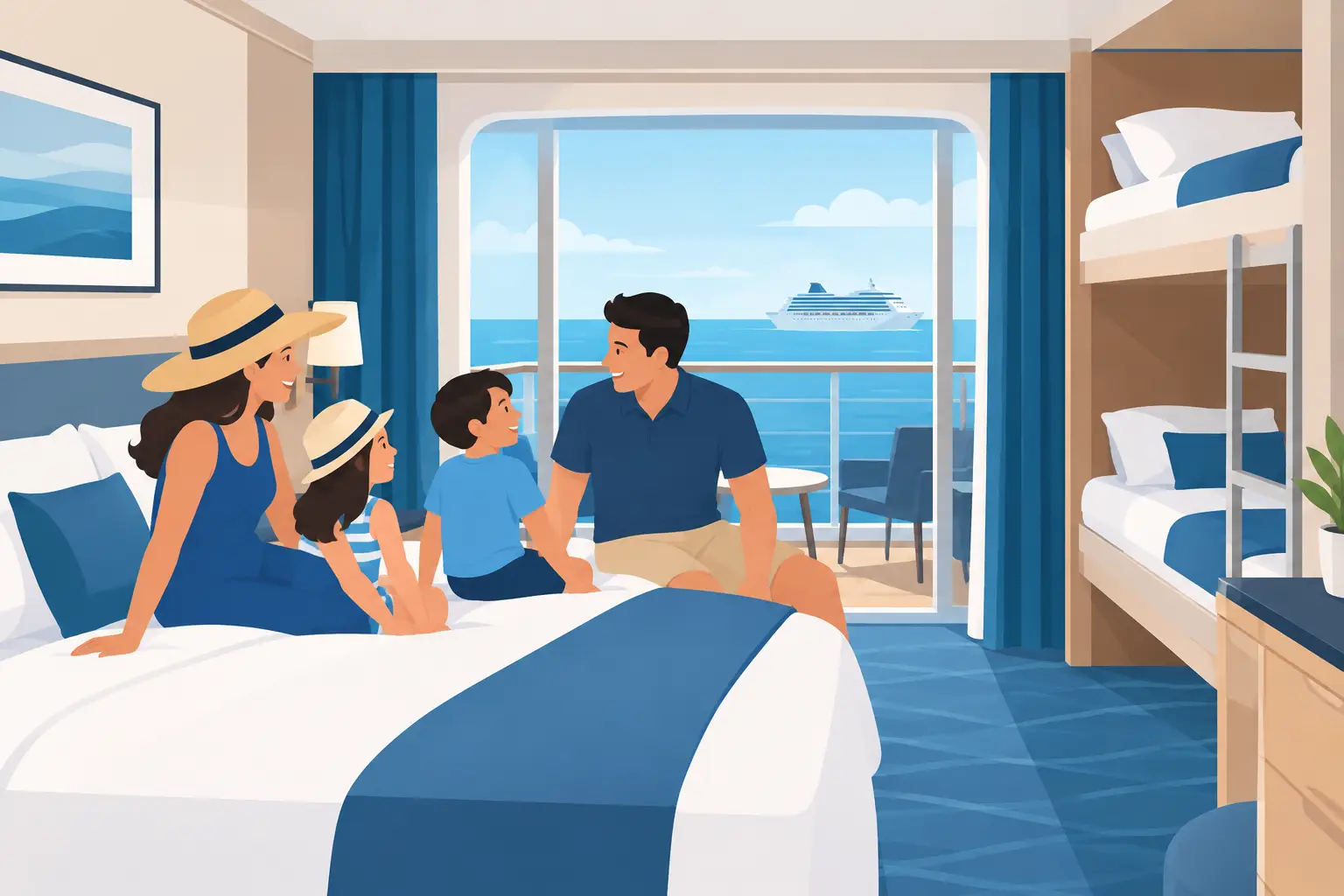
A cruise can be one of the easiest ways for a family to travel together: everyone wakes up in the same destination, meals are close at hand, and there is room for both shared adventures and quiet time. But can families share cruise cabins comfortably and within the cruise line’s rules? Often, yes. The right arrangement depends on your family’s ages, cabin category, budget, and how much personal space everyone needs to truly enjoy the voyage.
For some families, one well-designed suite creates a warm, memorable home base. For others, two connecting staterooms make the entire vacation feel more relaxed. The best choice is rarely just about fitting everyone into a room. It is about creating a setup that lets grandparents rest, parents recharge, children settle in, and the whole group look forward to time together.
Can Families Share Cruise Cabins Under Cruise Line Rules?
Cruise lines set a maximum occupancy for every stateroom, and that number is firm. A cabin designed for two guests cannot simply accommodate a third person because the child is small or someone is willing to sleep on the floor. Capacity is tied to safety requirements, lifeboat assignments, and the number of berths in that specific cabin.
Many standard ocean-view, balcony, and veranda staterooms accommodate two guests, while select configurations sleep three or four using sofa beds, Pullman beds that lower from the wall or ceiling, or a combination of both. Larger family cabins and suites may accommodate five or more guests. Availability can be limited, especially on school-break sailings and popular holiday itineraries, so it is wise to identify the correct occupancy at the beginning of the planning process.
Age policies matter as well. Most cruise lines require infants to be at least six months old at the time of sailing, with higher age minimums on certain longer or more remote itineraries. A child still counts toward the cabin’s maximum occupancy, even when traveling in a crib. Some lines also have guidelines about where children may sleep and whether a parent or legal guardian must be assigned to the same cabin.
One practical detail surprises many travelers: the cabin that appears available online may not be available once every guest’s name, age, and sleeping arrangement are entered. Accurate guest details help ensure that your family is booked into a safe, approved configuration from the start.
The Most Comfortable Cabin Setups for Families
The ideal arrangement depends on the personalities in your party as much as the number of people traveling. A family with two young children may appreciate the convenience of everyone in one cabin. A multigenerational group may value a little more separation at the end of an active day ashore.
One larger cabin or suite
A larger stateroom can be a wonderful fit for a parent-and-children trip, particularly when the children are young and bedtime routines are still simple. Family-focused accommodations can offer extra storage, a convertible sofa, a spacious bathroom, and occasionally a divider that creates a sense of separation.
The trade-off is privacy. When one person wakes early, gets ready for dinner, or wants to rest after an excursion, everyone may feel the movement. One bathroom can also become a bottleneck before breakfast or an evening show. Before choosing this option, consider whether the group can comfortably share a compact space for the full length of the sailing, not simply whether everyone technically fits.
Connecting or adjoining cabins
Connecting cabins have an interior door between two staterooms. They provide a strong balance of togetherness and breathing room: parents can stay close to children while retaining two bathrooms, two closets, and separate sleeping areas. For families with older children, teenagers, or grandparents, this is often the most comfortable choice.
Adjoining cabins are close to one another but may not have an internal connecting door. They can still be convenient, although parents should be aware that children generally cannot move between cabins without entering the corridor. Cabin proximity is not guaranteed by simply booking two rooms in the same category, so the reservation should specifically identify connecting cabins when that feature is essential.
Nearby cabins for extended family
For a reunion-style sailing, grandparents, adult children, cousins, and close friends may be happiest in several cabins located in the same hallway or on the same deck. This approach gives each household a retreat while keeping the group close enough for easy meetups.
It is a particularly appealing choice on premium and luxury cruises, where the stateroom itself may be part of the experience – a private veranda for morning coffee, attentive in-suite service, or a peaceful place to enjoy the passing coastline. Families can share the voyage without feeling as though every moment must be shared.
Suites and multi-room accommodations
Select ships offer true multi-room suites, sometimes with separate bedrooms, living areas, multiple bathrooms, and expanded verandas. These accommodations can be ideal for a milestone birthday, anniversary celebration, or a family gathering where hosting space matters.
They are not always the most economical path, but their value is often found in comfort, privacy, and ease. A suite can give a family a natural place to gather for room service breakfast or pre-dinner conversation without crowding into a standard cabin. On luxury lines, suite categories may also include elevated amenities that make a special sailing feel even more personal.
Choosing the Right Cabin Mix for Your Family
Start with the people, not the promotion. Think about sleep schedules, mobility needs, bathroom habits, and the kind of vacation each traveler wants. A toddler who naps, a grandparent who turns in early, and teenagers who stay out late may all be better served by two cabins than by one larger room.
Then look at the itinerary. On a port-intensive voyage from Miami to Nice or Singapore to Sydney, your family may spend most daylight hours exploring ashore and use the cabin primarily for sleep and showers. On a sea-day-rich sailing, extra living space can have greater value. Weather can also affect your decision: a veranda may become a cherished private escape on a scenic itinerary, while a spacious interior layout may matter more on a busy family voyage.
Cabin location deserves attention, too. Midship rooms on lower decks are often preferred by travelers concerned about motion. Cabins near elevators can simplify getting around for guests with limited mobility, though those seeking quiet may prefer to be farther from high-traffic areas. Families should also consider what is above and below the cabin. A stateroom directly under a nightclub or pool deck can be less restful than one surrounded by other cabins.
Booking Details That Prevent Family Travel Stress
The best family accommodations are frequently among the first to sell. Connecting cabins, cabins that sleep four, and family suites represent a smaller portion of a ship’s inventory than standard double-occupancy rooms. Waiting for a sale can mean sacrificing the layout that would have made the trip more comfortable.
It also helps to be flexible about cabin category while staying firm on the features that truly matter. If connecting doors are non-negotiable, a different deck or view may be worth considering. If grandparents need a walk-in shower, elevator access, or a cabin near the family, those priorities should guide the selection before decorative extras.
Families should review the final reservation carefully. Confirm every guest is assigned to the intended stateroom, the occupancy matches the ship’s approved capacity, and any requested connecting-cabin feature is documented. If adults are assigned across cabins with minors, ask the cruise line or advisor about its specific policy before final payment. Rules can vary by line, ship, itinerary, and the ages of the children.
A travel advisor can be especially helpful when several households are involved. Rather than asking one person to collect passport names, birthdays, deposits, dining preferences, flight details, and excursion choices through an endless text thread, an advisor can help organize the moving pieces around a single, clear plan. Genesis Destinations can also help families compare cabin layouts across premium cruise lines and identify an option that supports both the celebration and the practical details behind it.
Make Space for the Moments That Matter
The best cabin arrangement is not necessarily the largest or the least expensive. It is the one that lets your family enjoy the rhythm of the cruise with fewer compromises: an unhurried morning, an easy place for children to settle down, a private pause between activities, and a comfortable gathering point at the end of the day.
When cabins are chosen with the family’s real needs in mind, the ship becomes more than a place to sleep between ports. It becomes part of the memories that last a lifetime.