

- 4 Views
- 9 Min Read
- (0) Comment
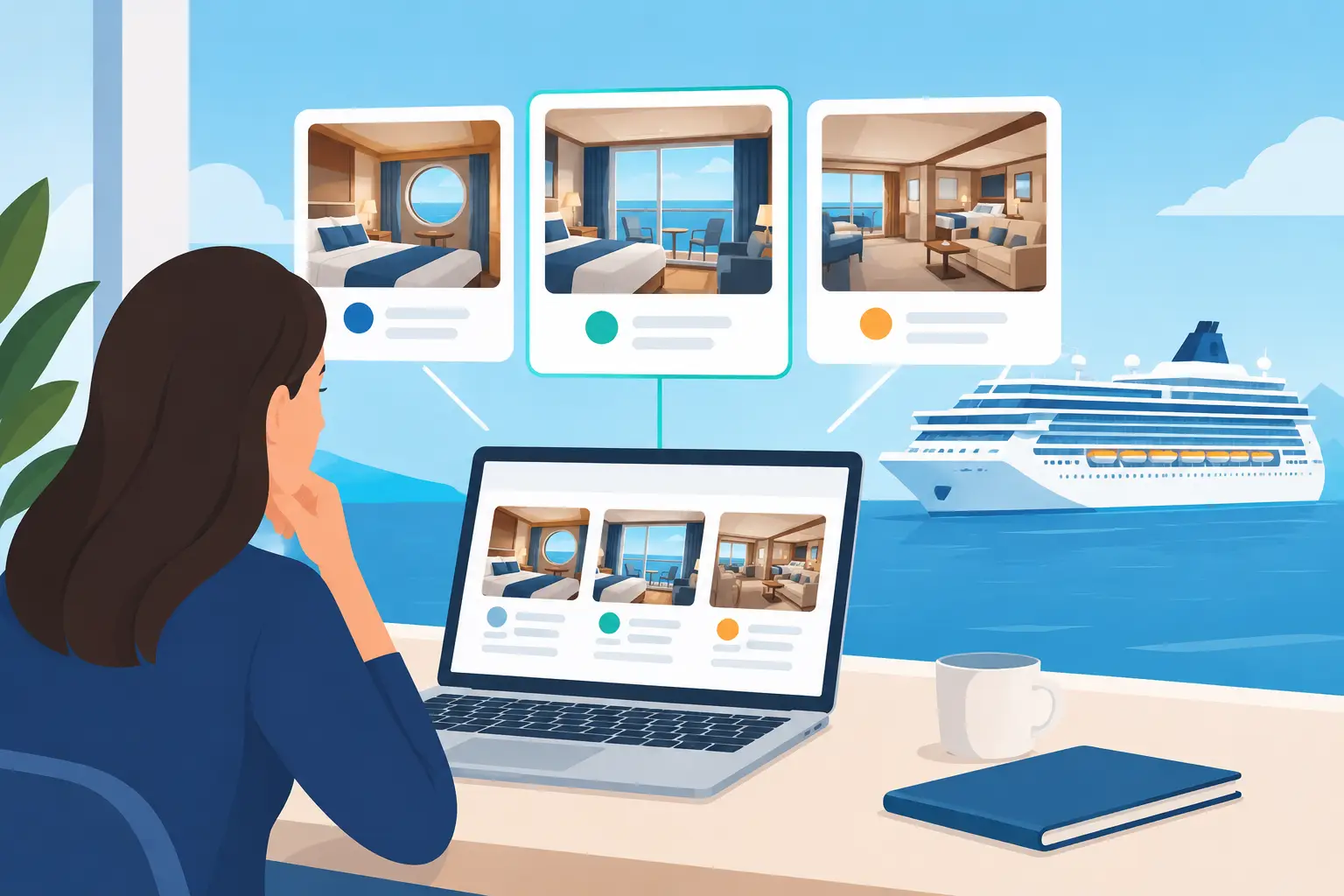
A cruise cabin is more than the place you sleep between ports. It is your private retreat after a day in Santorini, your quiet coffee spot before an early excursion, and the space where your travel companions can recharge in their own way. Knowing how to compare cruise cabins helps you choose a stateroom that supports the kind of journey you want – whether that means peaceful sea days, lively evenings, family time, or a little of each.
The category name and price are only the beginning. Two cabins labeled “balcony” can offer very different experiences depending on where they sit on the ship, what is above and below them, and how their layout serves your party. A thoughtful comparison turns a beautiful itinerary into a more comfortable, memorable voyage.
Start With the Way You Want to Cruise
Before looking at deck plans, consider how you expect to use your cabin. Travelers who see their stateroom as a comfortable place to shower and sleep may be happy with an interior or ocean-view cabin, especially on a port-intensive sailing. Those who picture slow mornings with room service, private sunsets, or a quiet place to read may find a balcony worth the investment.
For longer voyages, cabin comfort becomes more meaningful. A transatlantic crossing, an expedition itinerary, or a multi-week sailing gives you more time aboard the ship. Extra square footage, a seating area, and a private outdoor space can add real value. On a short Caribbean getaway, you may prefer to put more of the budget toward specialty dining, shore experiences, or an upgraded beverage package.
Travel style matters just as much as length. Couples may prioritize privacy and a romantic view. Multigenerational families often need cabins near one another, flexible sleeping arrangements, or connecting doors. Friends traveling together should discuss morning routines and storage space before choosing one shared cabin simply because the fare looks attractive.
How to Compare Cruise Cabins by Category
Cabin categories generally range from interior cabins to ocean-view cabins, balcony cabins, concierge-level accommodations, and suites. The right choice is not automatically the largest one. It is the one that makes your time onboard feel effortless.
Interior cabins
Interior cabins have no window and are often the most budget-friendly option. They can be an excellent fit for travelers who plan to spend most waking hours exploring ports, enjoying the ship, and joining friends for dinner and entertainment. They are also practical for group travelers who want to stay on the same sailing without stretching the budget too far.
The trade-off is the lack of daylight and outside views. Some guests sleep exceptionally well in the darkness; others miss being able to see the weather or wake naturally with the morning light. Check the cabin’s square footage carefully, as interior cabins can range from cozy to surprisingly spacious depending on the ship.
Ocean-view cabins
Ocean-view cabins provide natural light and a connection to the sea without the cost of a private balcony. Their windows may be large picture windows, portholes, or partially obstructed views. That final detail deserves attention. An obstructed-view cabin can still be a smart value, but it should be chosen intentionally rather than assumed to offer a clear panorama.
These cabins suit travelers who want daylight in their room and enjoy looking out at changing coastlines, but do not expect to spend much time sitting outdoors privately.
Balcony cabins
A balcony cabin offers fresh air, a personal view, and room to step outside without leaving your stateroom. For many guests, it transforms sea days and scenic sailings through places such as Alaska, the Mediterranean, or the Norwegian fjords. It can also give early risers a peaceful place to enjoy coffee without waking a sleeping partner.
Still, not all balconies are equal. Some are deeper than others. Some overlook lifeboats, public promenades, or neighboring balconies more directly than expected. On certain ships, a balcony may be shaded by the deck above, while another cabin in the same category receives more sun. Ask about the specific cabin location, not only the category description.
Suites and premium accommodations
Suites often provide more than additional room. Depending on the cruise line, they may include elevated dining, dedicated lounges, priority embarkation, butler service, enhanced in-suite amenities, or access to exclusive outdoor areas. On luxury-focused sailings, the suite itself may be central to the overall experience.
For a milestone anniversary, family reunion hosts, or travelers who value a more private onboard rhythm, those benefits can be worth the difference. But compare what is actually included. A larger suite with few added privileges may suit one traveler, while a smaller premium cabin with meaningful access and service may better suit another.
Study the Deck Plan, Not Just the Cabin Photos
Cruise websites understandably feature their most photogenic cabins. A deck plan reveals the practical details that photos do not: the cabin’s exact position, nearby elevators, service areas, public venues, and cabins that may connect.
Midship cabins on lower decks generally feel the least motion, making them a reassuring option for guests concerned about seasickness. Forward cabins can feel more movement, particularly in rougher seas, while aft cabins may experience vibration or engine noise on some ships. That does not make forward or aft cabins poor choices. Aft-facing balconies can have extraordinary wake views, and forward cabins may be close to the spa, fitness center, or observation lounge. The best location depends on your priorities.
Also look vertically. A cabin beneath a buffet, pool deck, theater, nightclub, or fitness center can be more exposed to early-morning chair scraping, music, or foot traffic. A cabin with staterooms directly above and below it is often a safer choice for travelers who want quiet evenings and unhurried mornings.
Being close to elevators is another personal preference. It can reduce walking for guests with mobility concerns or for families moving between cabins, but cabins immediately beside busy elevator lobbies may feel less private. On a large ship, a modest walk from the elevator can be a worthwhile exchange for a calmer corridor.
Compare Layout, Not Just Square Footage
Square footage is useful, but layout tells the fuller story. A compact cabin with an efficient bathroom, generous closet space, and room under the bed for luggage may feel more comfortable than a larger one with awkward furniture placement.
Review sleeping configurations, especially for families and friend groups. A sofa bed, pull-down berth, or convertible twin arrangement can work well, but it changes the usable floor space once everyone is asleep. If two adults are sharing, confirm whether the beds can be configured as a queen. If a child, teen, or third adult will use a sofa bed, ask how much room remains to move around.
Bathroom design also varies widely. Some cabins offer a single combined bathroom, while others separate the toilet and shower areas. That distinction can make getting ready much easier when several people share a cabin. Storage deserves equal attention on a longer cruise, particularly for formal nights, active excursions, or warm-weather and cool-weather ports on the same itinerary.
Consider Views, Privacy, and the Experience Outside Your Door
A sea view may be calming, but the direction and surroundings of that view matter. Port-side and starboard-side cabins are sometimes discussed as though one is always better. In reality, it depends on the itinerary, docking arrangements, sailing direction, and time in port. A knowledgeable advisor can help you weigh this for a particular voyage, but no side can guarantee the best view throughout an entire itinerary.
Cabins overlooking a promenade, central atrium, or public boardwalk can put you close to the energy of the ship. They may be convenient and entertaining, but they can offer less privacy than a traditional ocean-facing cabin. For travelers seeking a restful retreat, a private ocean-facing balcony or a quiet ocean-view room may feel more aligned with the experience they want.
If your sailing includes scenic cruising, such as glacier viewing or coastal passages, think about where you will spend that time. Many guests prefer a balcony, while others enjoy observation lounges because they offer wider views, warmth, and companionship. There is no wrong answer, only the right fit for your travel preferences.
Coordinate Cabins Carefully for Families and Groups
When planning a reunion, celebration, or friends’ sailing, proximity can matter as much as cabin type. Booking cabins in the same general area helps everyone meet more easily, share plans, and keep younger travelers close by. Yet “nearby” may mean next door, across the hall, or several doors apart, so verify the actual cabin numbers before confirming.
Connecting cabins are especially valuable for parents with children or families who want shared access without giving up separate bathrooms and sleeping spaces. They are limited in number and can sell quickly. Adjoining cabins without an interior connecting door are still close, but they do not provide the same convenience.
Accessibility should be addressed early as well. Accessible cabins are designed with specific features, such as wider doorways, roll-in showers, grab bars, and turning space, but configurations vary by ship. Travelers should discuss individual needs rather than assume that a standard cabin near an elevator will provide the right support.
Look Beyond the Fare When Comparing Value
A lower cabin fare can be appealing, but value comes from the full experience. Compare the cabin rate alongside what the category includes, the time you will spend onboard, the itinerary’s intensity, and any benefits attached to a higher category. On select sailings, a premium cabin may include amenities that offset expenses you would otherwise pay separately.
It is also wise to compare the cabin you want with the cabins one step above and below it. Sometimes the difference between an ocean-view and balcony cabin is substantial; other times, a modest additional cost brings a meaningful upgrade in comfort. Likewise, a guarantee cabin may offer savings but gives the cruise line control over your final room assignment. It can work well for flexible travelers, though it is less suitable when location, connecting rooms, accessibility, or a particular view is essential.
Genesis Destinations can help translate these details into a cabin choice that fits your itinerary, travel party, and priorities. The goal is not simply to reserve a stateroom. It is to make sure every traveler has a place onboard that feels considered from the moment they unpack.
Before you book, picture one ordinary day at sea: where you will have coffee, where everyone will get ready for dinner, how easily you can rest, and whether the room gives you the privacy or connection you value most. That picture often points to the cabin that will make your dream voyage feel truly your own.